
The Pura Raza Española (PRE), or Purebred Spanish Horse, is one of Spain’s most recognized and historically significant horse breeds. Known for its elegant appearance, expressive movement, athletic ability, and distinctive presence, the PRE horse has a long-standing place in Spanish equestrian culture and continues to attract riders, breeders, and enthusiasts around the world.
But there is more to the PRE horse breed than its striking appearance. Its identity is rooted in centuries of selective breeding, documented ancestry, and an official registration system designed to preserve the purity and characteristics of the breed.
Whether you’re discovering the Pura Raza Española horse for the first time, considering one as a riding or competition partner, or exploring breeding opportunities, understanding its history, characteristics, temperament, and registration is an important first step.
What Does PRE Mean?
PRE stands for Pura Raza Española, which translates to Purebred Spanish Horse. It is the official designation for horses registered in the PRE Stud Book, where their identities and genealogical information are documented.
Official PRE status is established through documented ancestry and registration, not simply a horse’s appearance, place of birth, or seller’s description.
Origins of the Pura Raza Española
The history of the PRE horse is closely connected to Spain’s equestrian heritage. References to Spanish horses appear in Roman writings, where they were admired for their beauty, endurance, and courage. Over centuries, selective breeding helped establish the characteristics that became associated with the Spanish horse breed.
The Spanish horse also played an important role in Spain’s royal and military history. Spanish horses traveled to the Americas alongside Spanish conquistadors and contributed to the ancestry of numerous American horse breeds. Throughout Europe, they were highly sought after by royal courts and influenced the development of classical horsemanship.
The breed received particular attention under King Philip II, who established the Royal Stables of Córdoba in 1570 to promote and preserve Spain’s distinguished horses. This royal patronage helped strengthen the Spanish horse’s reputation for beauty, athleticism, and trainability.
The Spanish horse’s influence can still be seen in classical equestrian traditions today. Its historical connection to institutions such as the Spanish Riding School in Vienna reflects the important role Spanish horses played in the development of European classical riding.
Although the breed has evolved alongside modern equestrian sport, preserving its distinctive characteristics and documented bloodlines remains a priority.
What Makes a Horse a Registered PRE?
One of the most important distinctions between a PRE and other horses is official registration.
A registered PRE horse must meet the requirements of the official PRE Stud Book, managed by ANCCE (the National Association of Purebred Spanish Horse Breeders). ANCCE serves as the international organization responsible for the breed’s genealogical records and breeding program.
DNA parentage testing is implemented on 100% of the livestock recorded in the PRE Stud Book. This process verifies that a horse’s recorded parents match its genetic parentage, supporting the accuracy of genealogical records across generations.
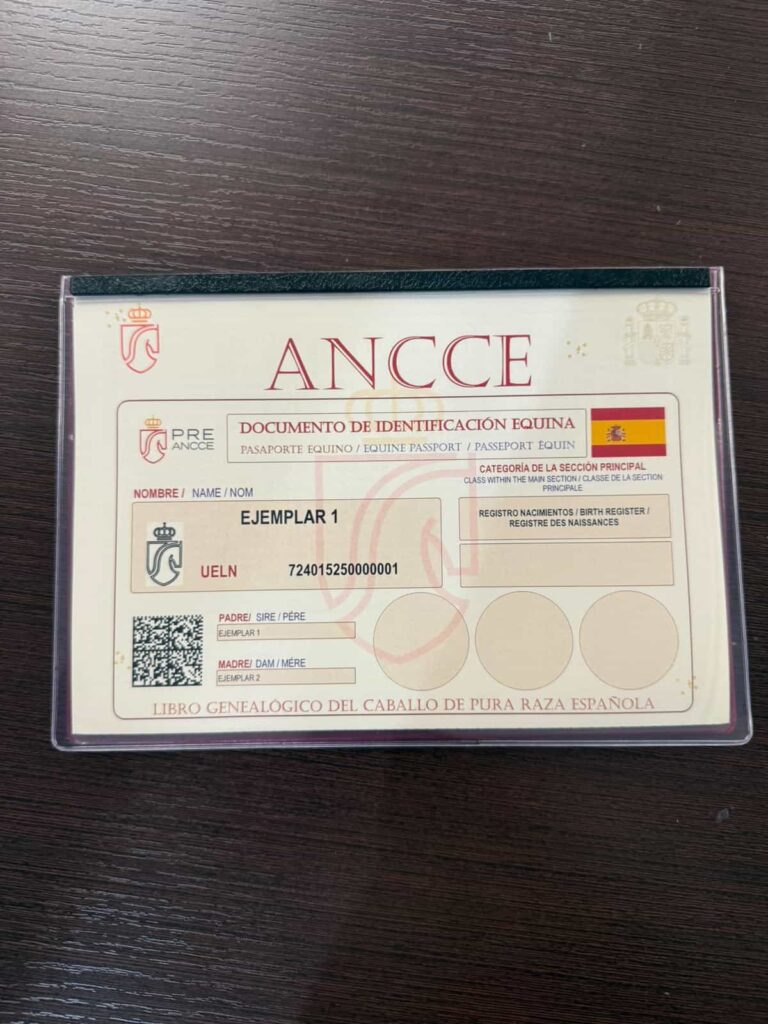
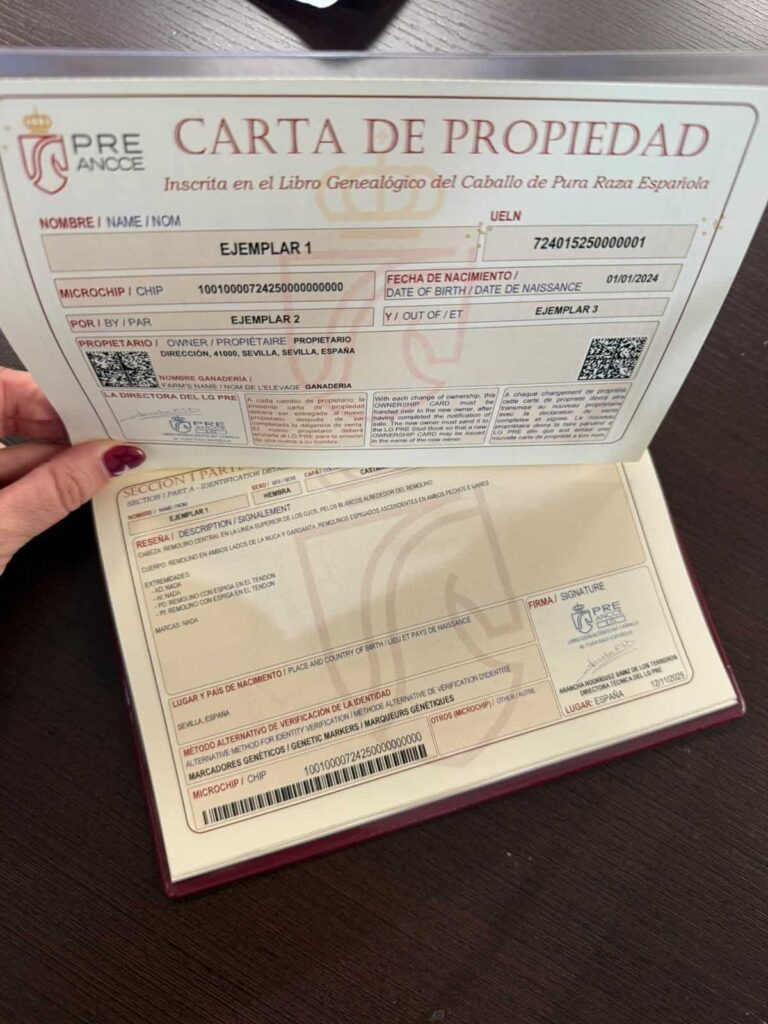
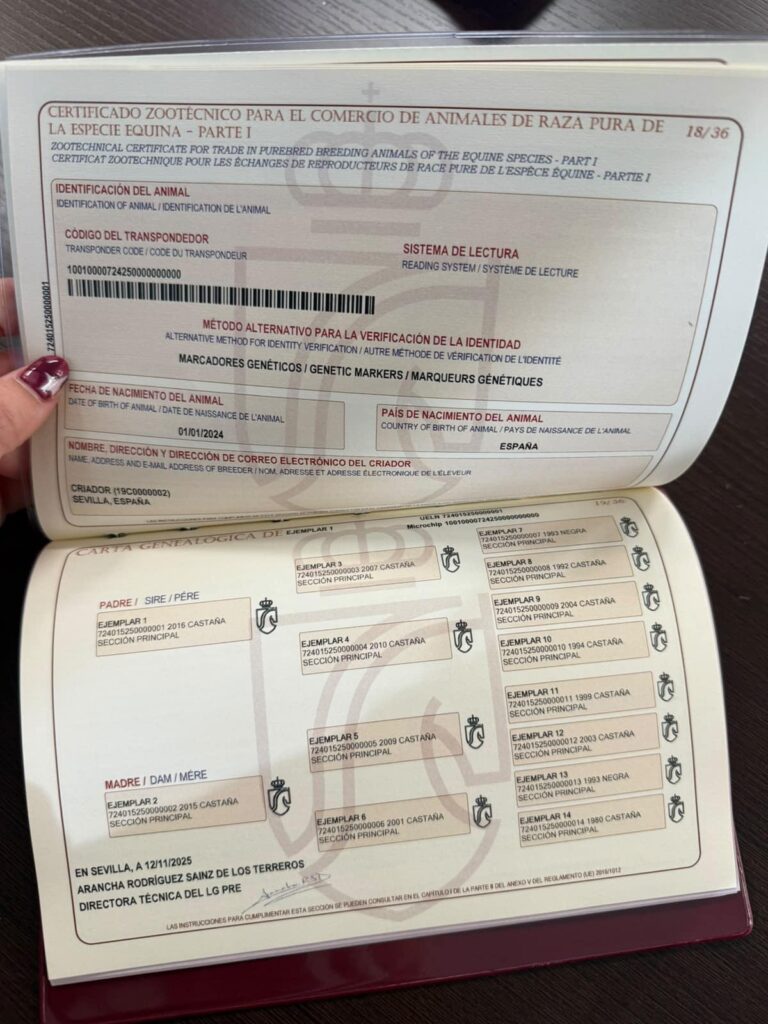
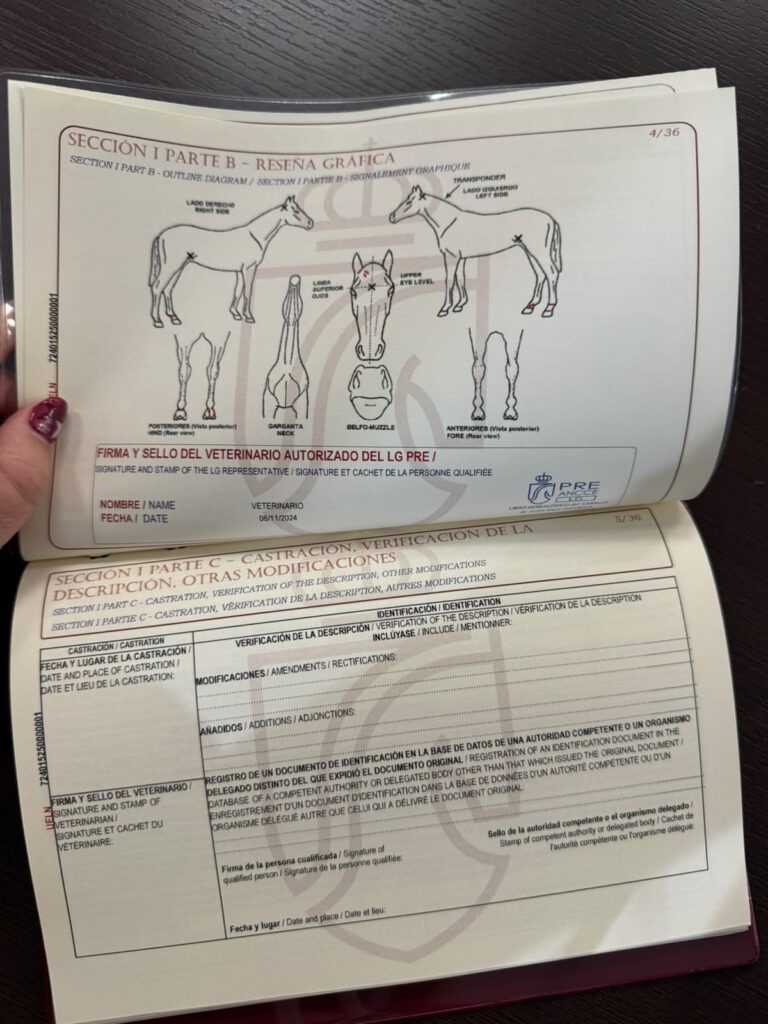
Crossbred horses are not eligible for registration in the PRE Stud Book. This requirement helps maintain a documented purebred population and protect the breed’s identity.
It is also important to distinguish between registration and breeding approval. A horse may be registered as a PRE without automatically being approved to produce registered PRE offspring. Stallions and broodmares must meet the applicable requirements for breeding authorization.
For prospective buyers and breeders, verifying both registration and breeding status is an essential part of making an informed decision.
The official PRE Stud Book database is available online through ANCCE, allowing owners, breeders, and enthusiasts to explore registered horses and their genealogical information.
Characteristics and Conformation of the PRE Horse
The PRE horse is widely admired for its combination of elegance, strength, and harmonious proportions.
Typical PRE horse characteristics include a well-proportioned body, a strong and often arched neck, a developed topline, and powerful hindquarters. The breed is also recognized for its expressive presence and movement.
Many PRE horses have a relatively compact, nearly square conformation that contributes to an impression of balance and agility. Their movement is often characterized by expressive action and an ability to engage the hindquarters, qualities that can be particularly valuable in collected work.
However, individual horses vary considerably. Conformation, movement, training, and athletic ability should always be assessed on an individual basis rather than assumed from breed identity alone.
PRE Horse Temperament and Trainability
The PRE horse temperament is often described as intelligent, responsive, willing, and people-oriented. These qualities have contributed to the breed’s long association with classical horsemanship and its popularity among riders who value communication and partnership.
Many PRE horses demonstrate sensitivity to their riders’ aids and an eagerness to engage in their work. When paired with consistent, thoughtful training, these qualities can support a rewarding relationship between horse and rider.
Beyond athletic ability, the PRE is also valued for its loyalty and companionship. Its appeal extends beyond the competition arena, and many owners appreciate the breed’s willingness to connect with people and become part of their everyday lives.
Sensitivity, however, is not the same as suitability for every rider. An individual horse’s temperament is influenced by genetics, handling, education, environment, and experience. Some PRE horses may be appropriate for amateur riders, while others require more experienced handling or training.
As with any breed, selecting the right horse involves evaluating the individual rather than relying solely on general breed characteristics.
Why PRE Horses Are Natural Athletes
The athletic qualities associated with the PRE horse have helped establish its reputation across a variety of equestrian disciplines.
Balance, agility, strength, and responsiveness are among the traits commonly valued in the breed. Many PRE horses demonstrate a natural aptitude for collected movement, supported by their ability to engage the hindquarters and maintain an expressive, elevated way of going.
Collected movements such as pirouettes, piaffe, and passage are particularly associated with the breed’s traditional strengths. While these exercises require extensive training and development, the PRE’s balance and aptitude for collection can provide a valuable foundation.
These characteristics can be advantageous in disciplines requiring precision, coordination, and close communication between horse and rider.
Athletic ability, however, is not determined by breed alone. Soundness, conformation, conditioning, training, and the individual horse’s natural abilities all influence performance.
The PRE’s versatility is reflected in its participation in dressage, working equitation, classical riding, and recreational pursuits.
PRE Horses in Dressage
The PRE dressage horse has become an increasingly familiar presence in modern equestrian sport.
The breed’s expressive movement, responsiveness, and aptitude for collected work can make it well suited to the technical demands of dressage. Qualities such as balance, suppleness, engagement, and willingness are especially valuable as horses progress through their training.
The PRE’s connection to classical dressage is deeply rooted in European equestrian history. Spanish horses influenced the development of classical horsemanship, and this legacy is reflected in institutions such as the Spanish Riding School in Vienna and the Royal Andalusian School of Equestrian Art in Jerez, Spain.
PRE horses have competed internationally, including at the highest levels of dressage, demonstrating the breed’s potential in a discipline that demands both athleticism and precision.
At the same time, not every PRE is destined for Grand Prix competition. Many make rewarding partners for riders developing their skills through the levels, provided the individual horse’s training, temperament, and physical abilities are appropriate.
The most successful partnerships are built on sound training, realistic expectations, and a clear understanding of the horse’s strengths.
Explore more about PRE horses in equestrian competition through our PRE in Sport resources.
PRE Horses in Working Equitation
Working equitation is another discipline in which the PRE horse’s traditional qualities can be appreciated.
Rooted in practical riding traditions, working equitation combines elements of dressage, obstacle negotiation, and, at certain competition levels, speed. The discipline emphasizes responsiveness, balance, maneuverability, and the relationship between horse and rider.
PRE horses can be well suited to these demands because of their agility, trainability, and ability to perform collected movements.
Working equitation also highlights the versatility of the Spanish horse, connecting traditional horsemanship with modern competitive opportunities.
As with dressage, success depends on the individual horse’s abilities, education, and suitability for the discipline.
PRE Horse Colors
Although gray is one of the most recognizable PRE horse colors, the breed appears in a variety of coat colors.
Gray and bay are especially familiar within the breed, while black, chestnut, and other accepted colors can also occur.
A gray PRE may be born with a darker coat that gradually lightens as the horse ages. This can result in significant changes in appearance over time.
Coat color is often one of the first features people notice, but it does not determine a horse’s breed status, quality, temperament, or athletic potential. For registration purposes, a horse must meet the official requirements of the PRE Stud Book, including applicable identification and color rules.
PRE Horses Today
Today, the Pura Raza Española has an international following that extends well beyond Spain.
PRE horses are found in breeding programs, competitive sport, classical riding, and recreational equestrian settings around the world. Their appeal reflects both the breed’s historical significance and its continued relevance to modern riders.
ANCCE, founded in 1972, plays a central role in maintaining the PRE Stud Book, supporting the breed’s breeding program, and promoting the Pura Raza Española internationally. The organization also connects breeders, owners, and enthusiasts across different countries.
PRE conformation shows offer opportunities to present and evaluate horses according to established breed standards. These events help breeders assess their horses, showcase breeding programs, and participate in the wider PRE community.
The breed’s versatility also makes it appealing beyond competition. Individual PRE horses can enjoy careers in classical riding, recreational riding, countryside hacking, and carriage driving. Some become valued family companions, offering opportunities for different members of the family to enjoy horses according to their experience and riding abilities.
Together, these activities support the continued preservation and development of the PRE horse breed.
How to Find a Registered PRE Horse
For anyone considering the purchase of a Spanish PRE horse, confirming its official registration should be an early step.
The ANCCE database provides a way to check whether a horse appears in the PRE Stud Book and review available genealogical information.
Begin by requesting the horse’s official registered name and identification details from the seller. These can be used to locate and verify the corresponding records.
If the horse is being considered for breeding, confirm its breeding approval in addition to its registration.
Registration is only one part of the evaluation process. Prospective buyers should also consider the horse’s temperament, conformation, training, health, and suitability for their intended goals.
Whenever possible, see the horse in person, work with a knowledgeable trainer or qualified professional, and arrange a veterinary pre-purchase examination.
A well-informed purchase involves understanding both the horse’s documented identity and its individual qualities.
Explore our Breeder Resources, browse PRE Horses for Sale, or visit the PRE Resource Directory to connect with the wider PRE community.
Frequently Asked Questions About PRE Horses
What does PRE stand for in horses?
PRE stands for Pura Raza Española, meaning Purebred Spanish Horse. It is the official designation for horses registered in the PRE Stud Book.
Are PRE horses good for dressage?
Many PRE horses have qualities valued in dressage, including balance, responsiveness, expressive movement, and aptitude for collected work. However, individual conformation, training, temperament, and athletic ability determine a horse’s suitability for the discipline.
What is the typical PRE horse temperament?
PRE horses are often described as intelligent, willing, responsive, and sensitive. Temperament varies among individuals and is influenced by breeding, handling, training, and experience.
What colors can PRE horses be?
PRE horses are commonly seen in gray and bay, but black, chestnut, and other accepted coat colors also occur. Color alone does not establish whether a horse is a registered PRE.
How can I tell if a horse is a registered PRE?
The most reliable way is to verify its official identity and registration through the ANCCE-managed PRE Stud Book. Prospective buyers should request the horse’s registered name and identification details and confirm that the records match the horse being offered.
Discover the Pura Raza Española
The PRE horse represents a distinctive combination of Spanish heritage, athletic ability, and generations of carefully documented breeding.
From classical horsemanship to modern equestrian sport, the Pura Raza Española continues to be appreciated for its presence, versatility, and potential as a riding partner.
Understanding the breed’s characteristics, history, and official registration provides a stronger foundation for anyone interested in owning, riding, breeding, or simply learning more about these remarkable horses.
Explore the PRE Horse
Find breeders, horses, events, and resources dedicated to the Pura Raza Española. Visit The PRE Horse homepage.